RA-7000A

Automated Mercury Analysis with Seamless Automation from Start to Finish by RA-7000A with SANPRA™

Built for water analysis established method workflows (USEPA 245.1, 245.2, 7470A, JIS K0102, APHA 3112B, EN 1483 ISO 12846, HJ 597 and more), integrating oxidation, reduction, mercury vapor generation, and CVAAS measurement into a single controlled system.

Supports both Permanganate (KMnO₄) and Bromine (KBr-KBrO₃) oxidation workflows within one platform.

RA-7000A

Fully Automated Mercury Analyzer

From oxidation to detection — one seamless system with SANPRA™. Supports KMnO₄ and KBrO3-KBr workflows.

About the RA-7000A

About the RA-7000A

The RA-7000A is a mercury analyzer based on Cold Vapor Atomic Absorption Spectrophotometry (CVAAS), designed for reliable mercury determination in environmental and laboratory applications.

It supports method-based workflows for water analysis, enabling consistent and controlled measurement across routine and trace-level samples.

Suitable for a wide variety of post-digested sample solutions and aqueous samples, including:

River Water

industrial wastewater

drinking water

rain-runoff

seawater

lake water

Methods

USEPA 245.1 | USEPA 245.2 | USEPA 245.5 | USEPA 7470A | USEPA 7471B | ASTM D 3223-17 | EN-1483 | APHA 3112 | JIS K0102 | ISO 12846 and more

0.5ppt Detection Limit

Trace level detection limit down to 0.5ppt or 5ppt with chemical pre-treatment

Precision, Automation, and Reliability in Mercury Analysis

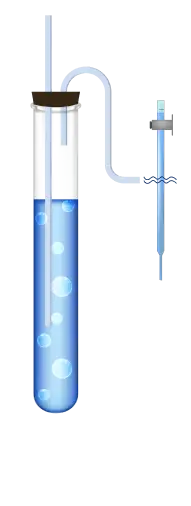
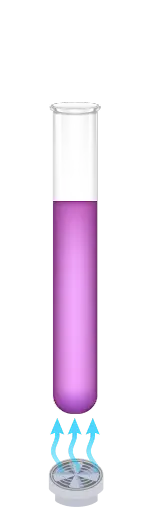
Discrete Direct Purge (DDP)
Reducing Vaporization

Discrete Direct Purge (DDP)
Reducing Vaporization

Fully Automated Permanganate
(KMnO₄)-Oxidation based Method Workflow

Fully Automated Permanganate (KMnO₄)-Oxidation based Method Workflow

The RA-7000A, when paired with the SANPRA™ 5 autosampler, enables fully automated permanganate oxidation digestion for total mercury analysis. The system automatically adds H₂SO₄, HNO₃, KMnO₄, and K₂S₂O₈, followed by controlled heating at 95°C to oxidize all mercury species into ionic mercury. After digestion and cooling, excess oxidant is neutralized by hydroxylamine hydrochloride and the ionic mercury (Hg²⁺) is reduced to elemental vapor (Hg⁰) for measurement by the RA-7000A CVAAS detector. This fully automated workflow supports regulatory procedures such as USEPA Method 245.1, 245.2, 7470A, ASTM D3223, JIS K0102 and APHA 3112B, ensuring consistent digestion and reliable results.

The RA-7000A, when paired with the SANPRA™ 5 autosampler, enables fully automated permanganate oxidation digestion for total mercury analysis.

The system automatically adds H₂SO₄, HNO₃, KMnO₄, and K₂S₂O₈, followed by controlled heating at 95°C to oxidize all mercury species into ionic mercury.

After digestion and cooling, excess oxidant is neutralized by hydroxylamine hydrochloride and the ionic mercury (Hg²⁺) is reduced to elemental vapor (Hg⁰) for measurement by the RA-7000A CVAAS detector.

This fully automated workflow supports regulatory procedures such as USEPA Method 245.1, 245.2, 7470A, ASTM D3223, JIS K0102 and APHA 3112B, ensuring consistent digestion and reliable results.

CVAAS Measurement

SnCl2 Addition

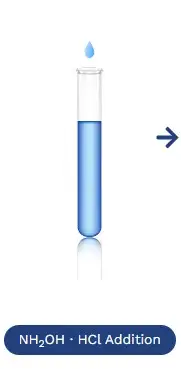
NH2OH · HCl Addition

Cooling

Heating

K2S2O8 Addition

KMnO4 Colour Check

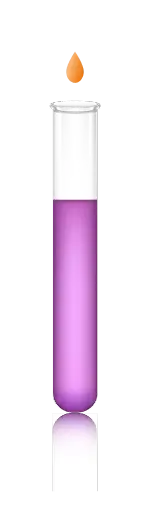
KMnO4 Addition

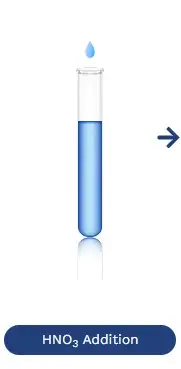
HNO3 Addition

H2SO4 Addition

K2S2O8 Addition

Potassium Persulfate Addition

KMnO4 Colour Check

LED Indicator Confirmation

KMnO4 Addition

Potassium Permanganate Addition

HNO3 Addition

Nitric Acid Addition

H2SO4 Addition

Sulfuric Acid Addition

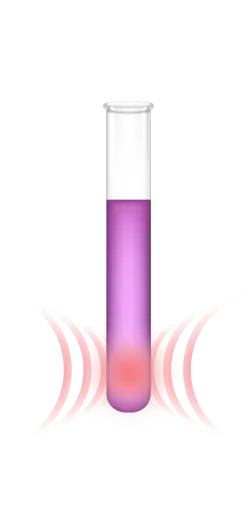
Heating

Infrared Heating Digestion

Cooling

Automated Cooling Process

NH2OH · HCl Addition

Hydroxylamine Hydrochloride

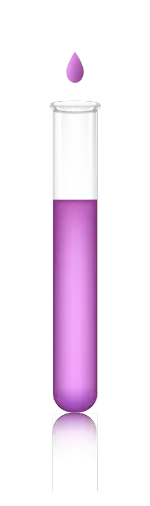
SnCl2 Addition

Stannous Chloride Addition

Measurement

High-Precision Detection

Automated Reagent Dispensing

Precise dispensing of H₂SO₄, HNO₃, KMnO₄, K₂S₂O₈, hydroxylamine hydrochloride, and SnCl₂.

Durable Acid-Resistant Aluminum Block

Prevents corrosion from acidic fumes and reagents.

LED Verification of Excess KMnO₄

LED Verification of
Excess KMnO₄

Ensures excess KMnO₄ as required by regulatory methods.

Infrared Heating Technology

Infrared Heating
Technology

Ensures rapid, uniform heating with precise temperature control.

Bromine (KBr-KBrO₃) Oxidation based
Method Workflow

Bromine (KBr-KBrO₃) Oxidation based
Method Workflow

The RA-7000A with SANPRA™ 3 supports bromine oxidation digestion, where mercury species are oxidized using bromine generated from KBr–KBrO₃ in acidic conditions. After oxidation, mercury is reduced to elemental vapor (Hg⁰) using SnCl₂ and measured by the RA-7000A CVAAS detector. This workflow supports bromine-based procedures such as ISO 12846 and HJ 597, providing reliable detection for laboratories following these standard methods.

Modular Configuration
for Method-Based Workflows

Secured,
Upright Waste Tank


1200mL waste tank provided can securely store all acidic waste after measurement.

1 of 4

RA-7000A CVAAS Detector


New generation CVAAS detector has an extended measurement range up to 400ppb and detection limit down to 0.5ppt (0.0025ng/5mL)

2 of 4

Detachable Reagents Rack


Transport the batch of reagents bottles securely with ergonomic handle designed in the detachable reagent rack. Bring the rack to safer location for reagents refill.

3 of 4

SANPRA™ Autosampler


Compatible with SANPRA™ 3, 5, and 7, enabling configuration based on oxidation method and sample type.


Supports both KMnO₄ digestion workflows and Bromine oxidation methods within the same system platform.

4 of 4

Modular Configuration
for Method-Based Workflows

Secured, Upright Waste Tank

1200mL waste tank provided can securely store all acidic waste after measurement. 1 of 4
RA-7000A CVAAS Detector

New generation CVAAS detector has an extended measurement range up to 400ppb and detection limit down to 0.5ppt (0.0025ng/5mL) 2 of 4

Detachable Reagents Rack


Transport the batch of reagents bottles securely with ergonomic handle designed in the detachable reagent rack. Bring the rack to safer location for reagents refill. 3 of 4

SANPRA™ Autosampler


Compatible with SANPRA™ 3, 5, and 7, enabling configuration based on oxidation method and sample type.

Supports both KMnO₄ digestion workflows and Bromine oxidation methods within the same system platform. 4 of 4

3 Types of SANPRA™ Available

3 Types of SANPRA™ Available

SANPRA™ 3

Flexible Autosampler for Bromine Oxidation Methods

USP

80-position autosampler for efficient batch mercury analysis
Compatible with bromine oxidation methods such as ISO 12846 and HJ 597
No carrier gas required, simplifying operation and reducing running cost

SANPRA™ 5

Fully Automated Digestion for Permanganate Methods

USP

80-position autosampler with fully automated digestion
Automates KMnO₄ oxidation digestion for regulatory methods including: APHA 3112B, EPA Method 245.1, ASTM D3223, and JIS K0102
No carrier gas required for simplified operation

SANPRA™ 7

Automated Digestion for Solid Mercury Analysis

USP

29-position autosampler designed for solid matrix digestion
Automates acid digestion and mercury detection for soil and other solid samples
Also compatible with aqueous sample analysis for flexible laboratory workflows

3 Types of SANPRA™ Available

SANPRA™ 3

Flexible Autosampler for
Bromine Oxidation Methods

USP

80-position autosampler for efficient batch mercury analysis
Compatible with bromine oxidation methods such as ISO 12846 and HJ 597
No carrier gas required, simplifying operation and reducing running cost

SANPRA™ 5

Fully Automated Digestion for
Permanganate Methods

USP

80-position autosampler with fully automated digestion
Automates KMnO₄ oxidation digestion for regulatory methods including: APHA 3112B, EPA Method 245.1, ASTM D3223, and JIS K0102
No carrier gas required for simplified operation

SANPRA™ 7

Automated Digestion for
Solid Mercury Analysis

USP

29-position autosampler designed for solid matrix digestion
Automates acid digestion and mercury detection for soil and other solid samples
Also compatible with aqueous sample analysis for flexible laboratory workflows

Reduces Environmental Burden,
Time Saving, Lower Operational Cost

Reduces Environmental Burden,
Time Saving, Lower Operational Cost

Reduces Environmental Burden, Time Saving, Lower Operational Cost

Save resources, save energy, less waste

About

50%

Reduced Waste Disposal

1200mL → 600mL

Total of

2hr 40mins

Shortened Measurement Time

11 hours 50 Minutes → 8 hours 30 minutes

(comparison between RA-7000A with SANPRATM-5 against RA-4500)

About

30%

Minimized Power Consumption

0.34kg CO₂ reduction per measurement Assuming measurement 3 times/week (150 times a year) 51.6kg CO₂ reduced yearly

RA-7 WIN Software

RA-7 WIN Software

Intuitive & Practical interface with easy-to-understand graphics.

Live Animation

Illustrates the system's status in real-time for effortless monitoring at a glance.

LIMS-Compatible

Seamlessly export CSV files for smooth laboratory data integration and reporting.

Dilution Tabulation

Clear, automated tabulation of sample and standard solutions prevents manual calculation errors.

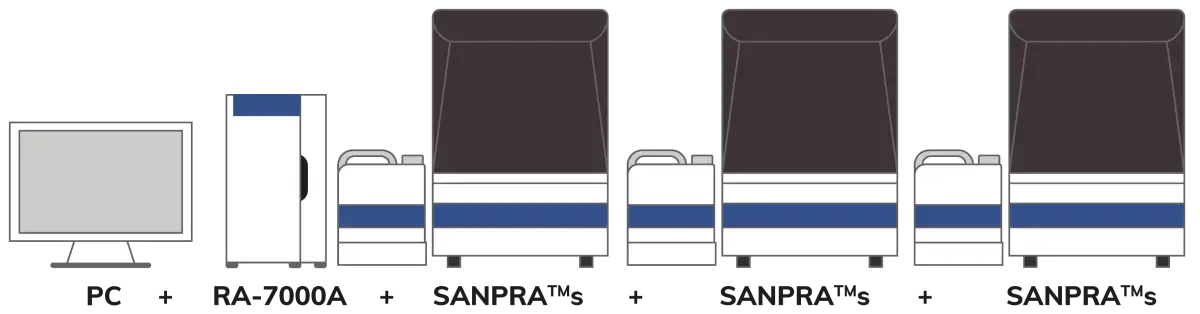
Multi-Unit Control

Control up to 3 SANPRA™ units simultaneously, or mix and match with an RH Gas Module.

System Log Files

Easy, immediate access to comprehensive system log files for prompt and accurate troubleshooting.

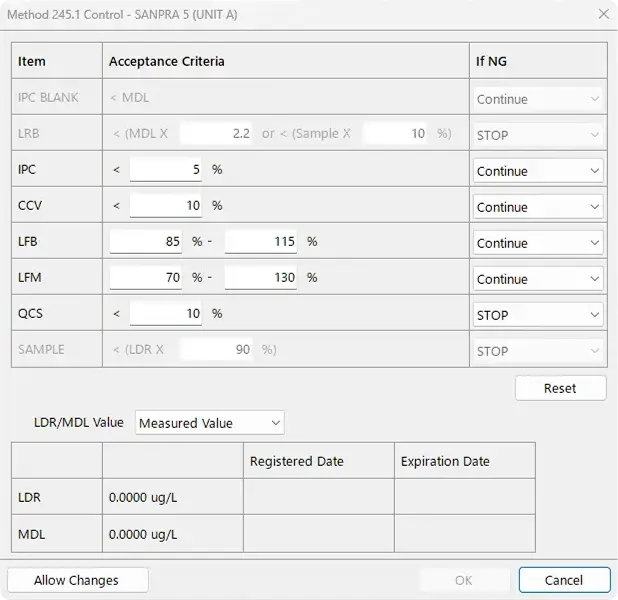
Featured EPA 245.1 QC Validation

Featured EPA 245.1 QC Validation

Laboratory that uses this method is required to operate a formal quality control (QC) program. RA-7WIN Software can perform the stringent requirements of method EPA 245.1 that includes:

Instrument Performance Check

Laboratory Reagent Blank

Laboratory Fortified Blank

Unknown sample

Unknown sample

Laboratory Fortified Matrix

Continuing Calibration Verification

Instrument Performance Check

Method Detection Limit

Featured EPA 245.1 QC Validation

Laboratory that uses this method is required to operate a formal quality control (QC) program. RA-7WIN Software can perform the stringent requirements of method EPA 245.1 that includes:

Instrument Performance Check

Laboratory Reagent Blank

Laboratory Fortified Blank

Unknown sample

Laboratory Fortified Matrix

Continuing Calibration Verification

Instrument Performance Check

Method Detection Limit

Convenient Side Door Handle

To ensure users can safely
open and close the SANPRA™ cover.

Built-in Chamber Lighting

Allows quick sample status checks at a glance. Optional in SANPRA™ 3; available in SANPRA™ 5 & 7.

Intelligent Sample
Tube Existence Sensing

To prevent reagents from dispensing without
a sample tube, creating a safe system for
users to operate.

Wide Opening Frontage

To ensure no obstruction during sample loading/unloading.

Designed for Safe & Easy Operation

Know more about the intelligent design elements that improve safety, accessibility, and ease of use, thoughtfully engineered to support smooth operation, better visibility, and a more user-friendly laboratory experience.

Instrument Performance Check (Blank)

Laboratory Reagent Blank

Instrument Performance Check (After Calibration)

Continuing Calibration Verification

Laboratory Fortified Blank

Laboratory Fortified Matrix

Quality Control Sample

Unknown sample

Linear Dynamic Range

Method Detection Limit

Versatile Configurations.
Flexible As You Want It To Be.

Versatile Configurations.
Flexible As You Want It To Be.

Scale Capacity. Maximize Productivity.

Expand Testing. Maximize Versatility.

Versatile Configurations.
Flexible As You Want It To Be.

Versatile Configurations.
Flexible As You Want
It To Be.

Scale Capacity. Maximize Productivity.

Expand Testing. Maximize Versatility.

Start Your Automated Mercury Analysis Today

Start Your Automated Mercury Analysis Today

Discover how the RA-7000A simplifies mercury testing with automated digestion and high-precision detection. Fill in the form to request product information or speak with our experts.

Start Your Automated Mercury Analysis Today

Start Your Automated Mercury Analysis Today

Discover how the RA-7000A simplifies mercury testing with automated digestion and high-precision detection. Fill in the form to request product information or speak with our experts.

RA-7000A Enquiry Form

Please fill out this form to connect with our local distributor.

Copyright 2026 © Nippon Instruments Corporation All rights reserved

Scroll to Top